
Seeing Double
Sustainable Herbs Initiative Learning Journey in France

by Ann Armbrecht, SHI Founder and Director
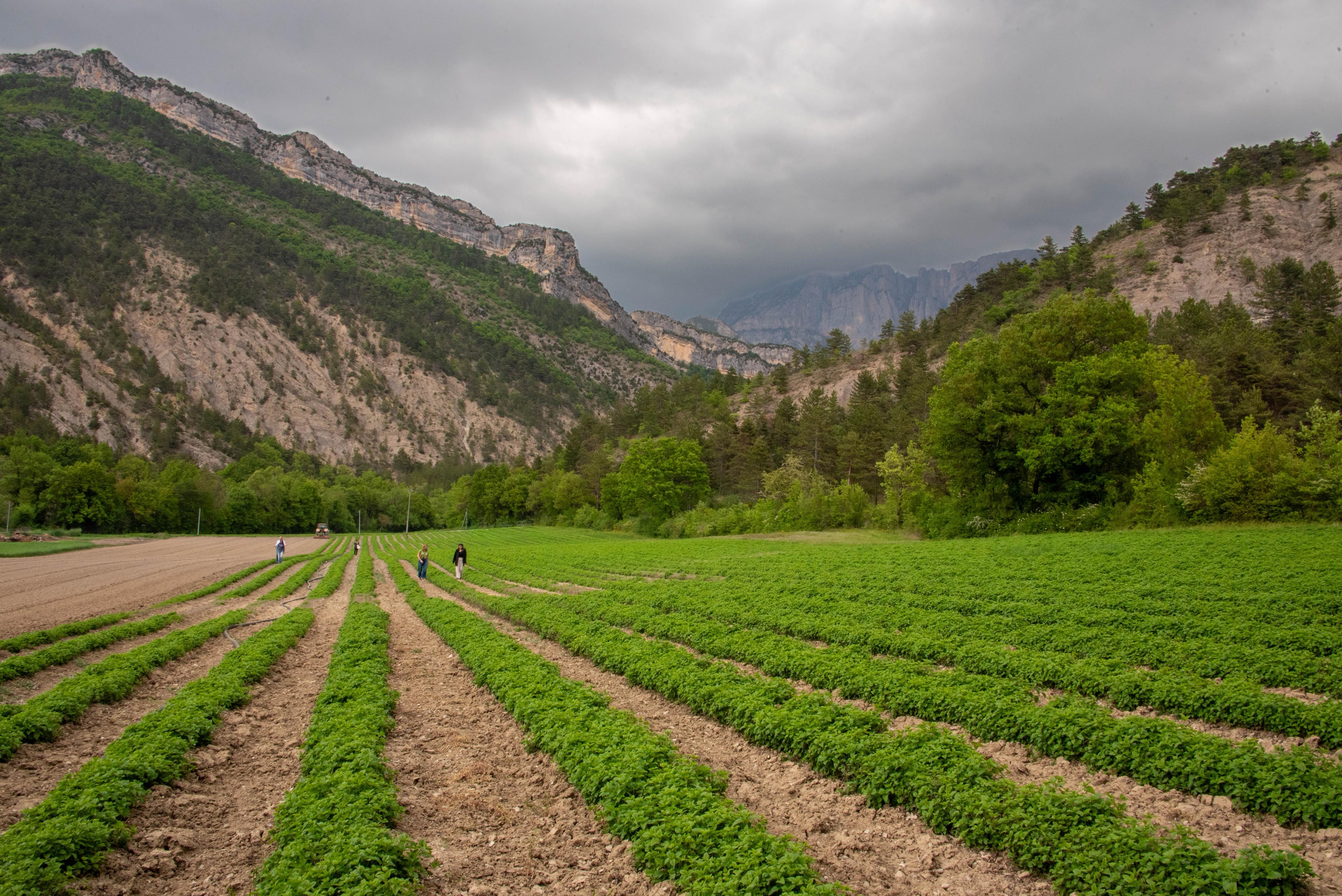
I am just home from the fifth Sustainable Herbs Initiative Learning Journey, this time to visit l’Herbier du Diois, a supplier and processor of organic medicinal and aromatic plants in the Drôme region of southern France. The Learning Journey was co-organized with Hélène Wostyn, head of international sales for l’Herbier.
We have had Learning Journeys in Appalachia, southern Oregon, and Nicaragua. What stays with me is how unique each region is. We have visited wild collectors hauling sacks of black cohosh up steep mountain slopes in eastern Kentucky, small-holder Nicaraguan coffee farmers diversifying their income by growing turmeric and ginger for a global market. We have spent time on the first Regenerative Organic Certified herb farms in southern Oregon to the small fields of thyme, savory, lemon balm, and sage nestled in the hills of southern France, scattered between limestone villages along the Drôme river.
I’m struck by the qualities of each place and the people working with the plants and how those qualities become lost when the plants reach the global market: thyme is known just as thyme, regardless of where and how it is grown. Turmeric is just turmeric.
Giving Place and the Plants a Voice
I started SHI to tell these stories because I believe they matter in the quality of the finished product and that they might help us become more responsible customers. And I began these Learning Journeys because I believed that place matters. The people harvesting the plants matter. These journeys to source are ways to experience that difference and to do it with others also working in this industry, to see what we might collectively do to bring the realness of the source back into an industry that is increasingly disconnected from that source.
As Ben Levine said after the first Learning Journey in Appalachia, “Why do we as an herb industry find ourselves in Las Vegas or right next to Disneyland for our biggest industry events? Sinking into the rolling hills of Appalachia was a welcome contrast. How did being in the woods shape our conversations, our decisions, our connections with one another?”
These journeys are on an entirely different scale than a trade show. Twenty-three people gathering in France or Nicaragua is not 80,000 attendees at Anaheim. It’s not clear what impact that can have, but for now I am trusting the oft-quoted saying by Nobel laureate, Ilya Prigogine, “When a complex system is far from equilibrium, small islands of coherence in a sea of chaos have the capacity to shift the entire system to a higher order.”
A Different Way of Seeing
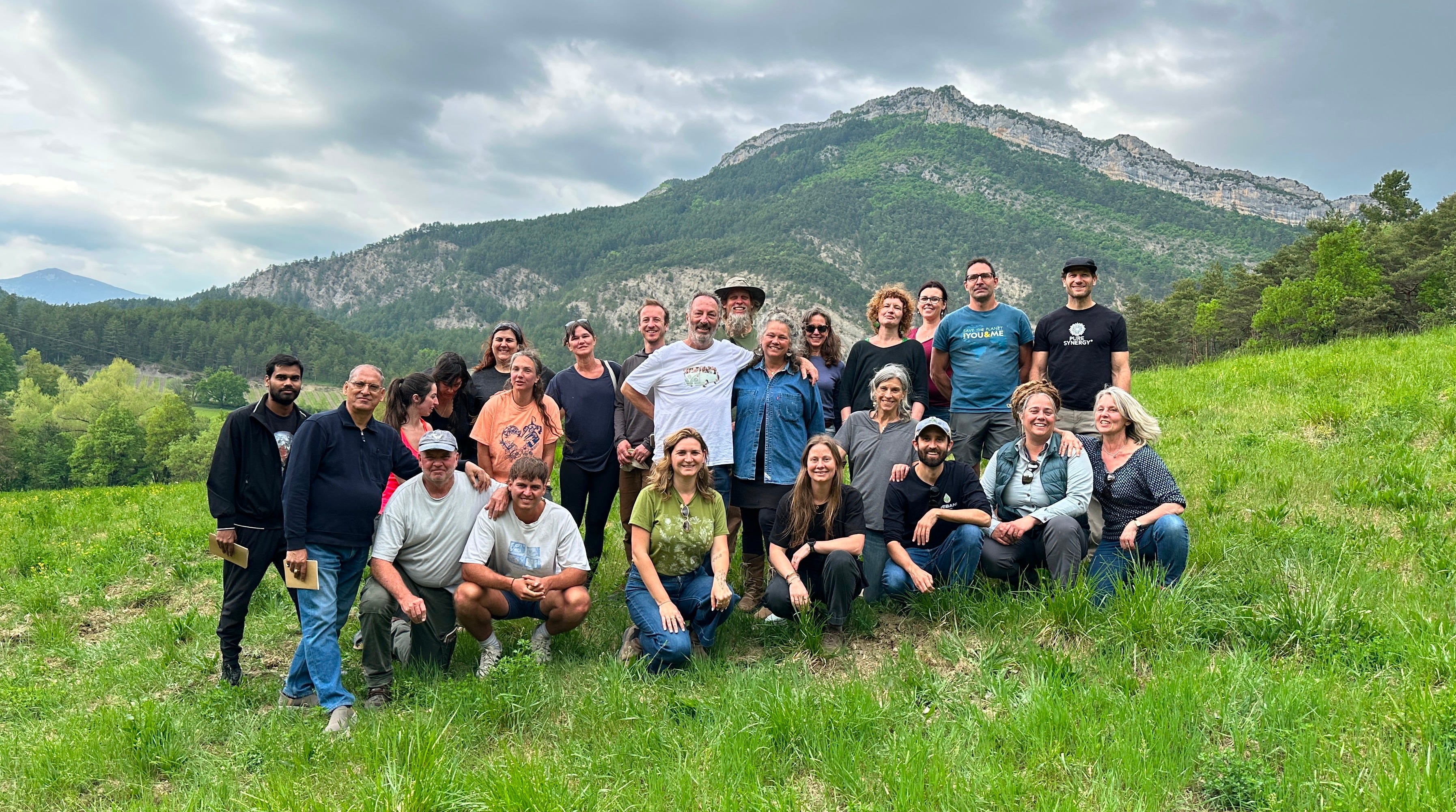
For five days, twenty three of us from around the world (Britain, Canada, India, France, Namibia, the Netherlands, Peru, and the United States) immersed ourselves in the work of l’Herbier du Diois, an herbal processing center in France.
I opened the first evening with a story I have told many times, one told to me by a village priest/shaman in Hedangna, where I lived in the upper Arun Valley of northeastern Nepal about the origin of the differences between humans and the ancestors, which, it turns out, has to do with seeing.
Humans can only see the physical object. Ancestors can “see double”, which, the priest explained, means seeing both the physical object and all that our eyes can’t see that sustains that object. Not seeing the invisible, the story goes, makes humans selfish.
Listening
We had come to l’Herbier, I continued, because, more than any processing facility I have visited, the company is designed within the context of a living system, in general but also in particular: the ecosystem of this valley.
I invited everyone in the circle to spend the week trying to see double, to see the ways this larger frame informed decisions at the processing facility and to be aware of our own ways of seeing and listening and to ask what we need to shift in ourselves to “see double”.
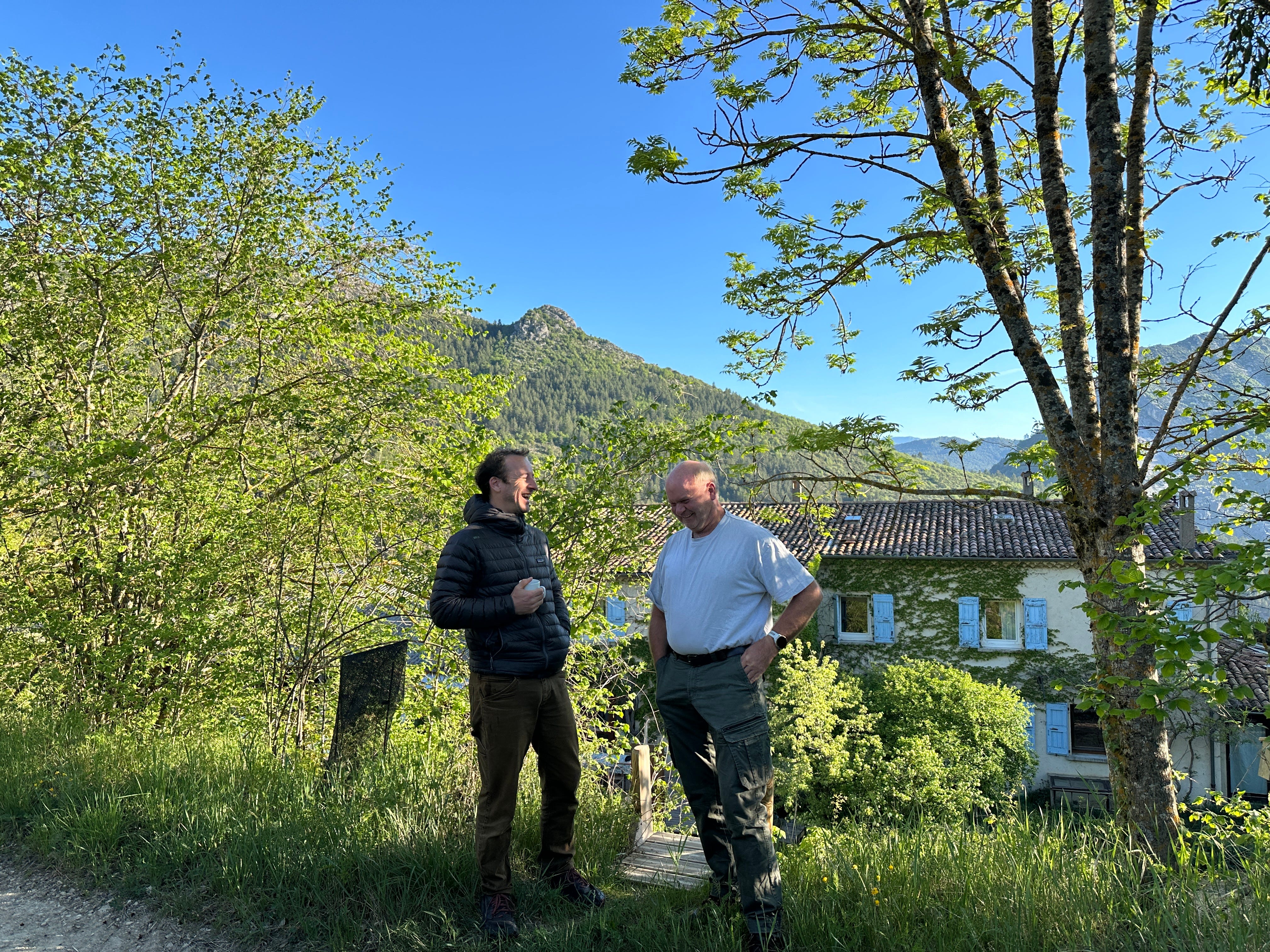
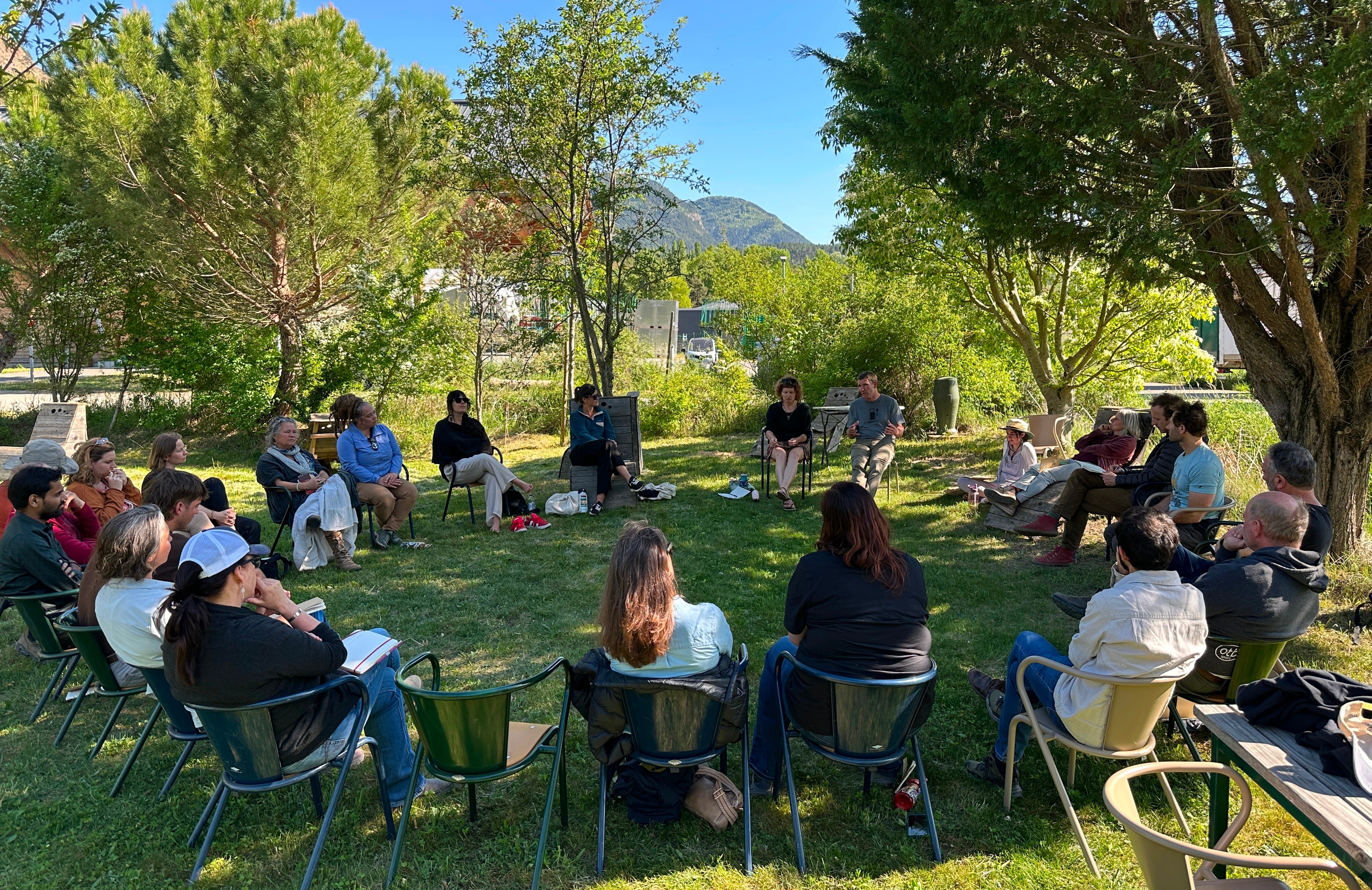
We then went for a solo silent walk on the land to help us each connect with this place in our own way. And then we did a dialogue walk with another person in the group, someone we didn’t know well, each sharing for 10 minutes 2-3 events or experiences in the past few years that have been important to them. These two foundational practices helped us begin the week by listening to the land and to each other, before we speak ourselves.
We then gathered in a circle on the deck of the farmhouse and shared our intentions for the week. This as a way of creating a container for our time together.
Owl Eyes and Eagle Eyes
The next morning, I shared a simple practice from the Wilderness Awareness School: owl eyes and eagle eyes. I showed how to hold fingers up on our peripheral vision and walk in that way. And then to put the finger right in front of your eyes and walk in that way. I then invited everyone to spend 5 minutes or so practicing moving between the two ways of seeing, noticing in particular how each way of seeing makes you feel. This is a simple exercise that begins to encompass what it takes and what it means to “see double”. Back in the circle, people shared how owl eyes shifted them into their hearts and to perceiving the whole whereas eagle eyes sharpened their mind, focusing in on the details. Both ways of seeing are key to the work we are doing.
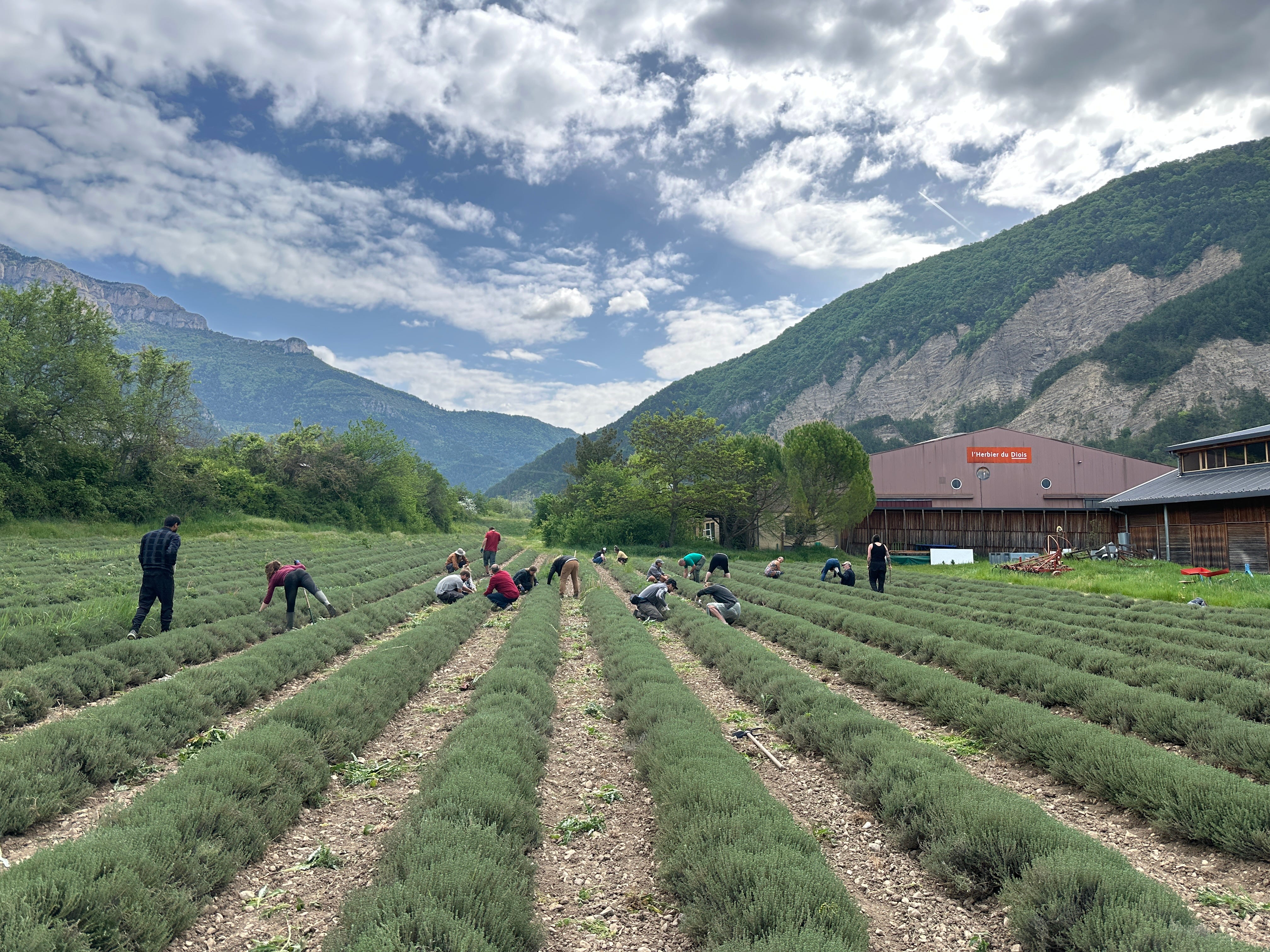
We then walked to a field of savory above the farmhouse where we stayed. Flora, the farm manager, spoke about farming practices on the farm. Then we did a plant sit, each sitting in silence with a plant. We gathered again and walked silently down a steep path to another field, this one of thyme, where we gathered in a small group to reflect on our experience.
I was with Ramesh Uniyal, from New Delhi, whom I thought was least likely to connect with this part of the Learning Journey. And yet, he shared a story about a researcher who was stuck in his research on higher constituent levels in a particular plant. Finally, when he was about to give up, the researcher was visited in his dreams by the plant he was working on, with the message to harvest it now. The researcher woke up, harvested and tested the leaves, and achieved the results that had been eluding him. My surprise was a good reminder of the many ways I wasn’t seeing double myself.
Organic as a Way of Designing
Later in the afternoon, we gathered upstairs in the impressive new processing center at l’Herbier. Farmers take a huge step in not working with chemicals in their fields, Tijlbert Vink, CEO of l’Herbier, explained. Too often, that investment is then lost in the second step, which is processing. He believed it was important to bring the same attention to this second step, to bring the version of not using chemicals in fields, both to the buildings and to the practices of processing.
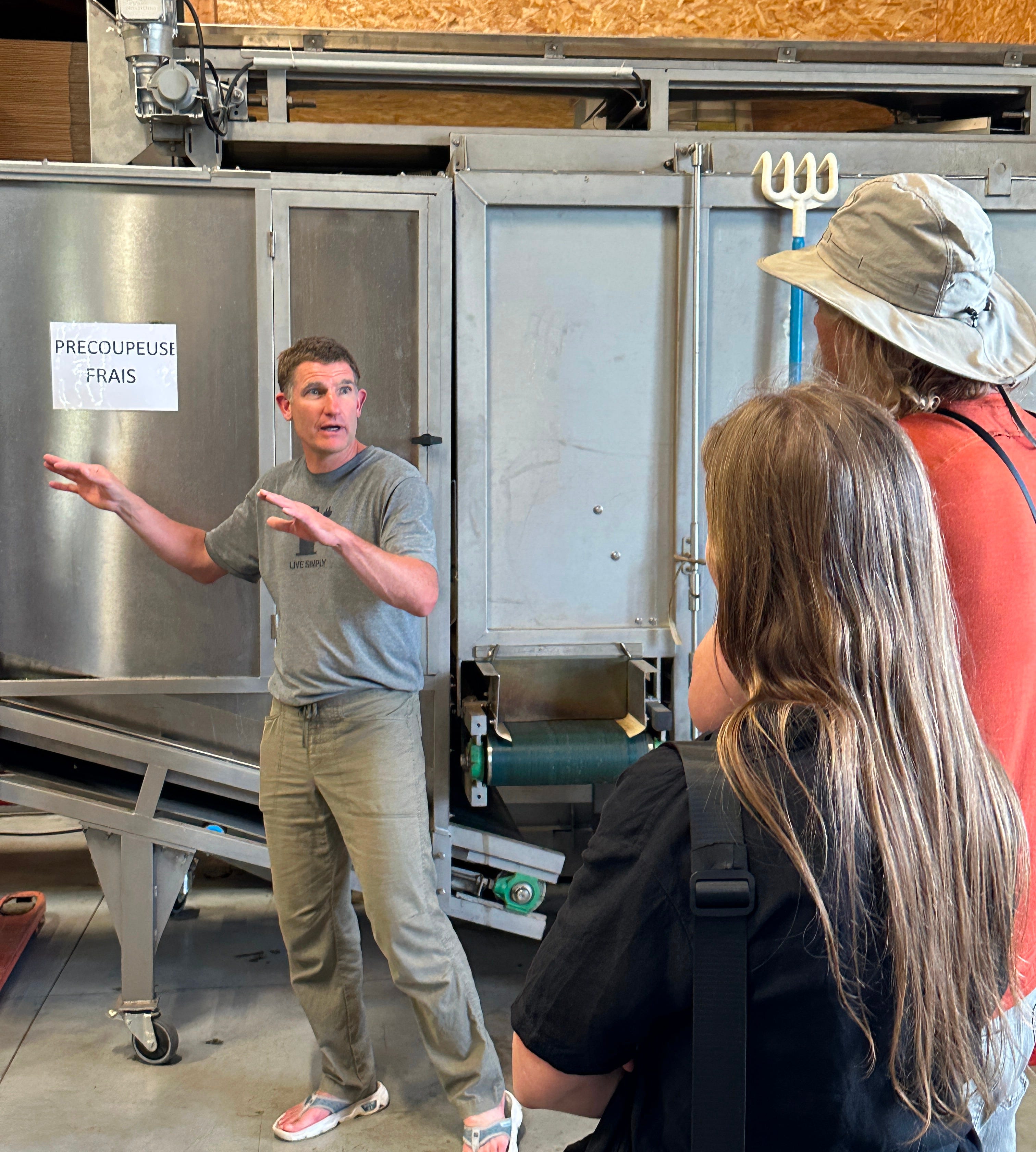
He saw how difficult it was to farm in ways that respect living systems, yet the farmers still did it. And so, it was really important for him to show it was possible to do it in the processing. It wasn’t easy. For example, they spent 600,000 Euros to study whether it was possible to build straw boxes to use for insulation and years getting the necessary permits to be allowed to build in this way. But he was 24, he said. He had a lot of energy to fight.
To him, the idea of organic is not just the herbs, he continued. It is in everything they do with their work from their wage policy (the gap between the lowest and highest wage is 2.6) to building boxes for insulation from straw from the region as a way to support local workers to rewarding employees for biking to work to designing drier boxes to minimize handling of the material and thus reduce chances for microbial contamination to using the warmed air beneath the solar panels in the driers, thus reducing the electricity needed. This last step is still in process. Among other things, it involved buying food-grade roofing since the air touching those panels will be circulating with the herbs. Everywhere we looked, there was intention behind the decision.
This video, Circles of Sustainability, produced by filmmaker Terrence Youk from an earlier trip to l’Herbier provides an overview of the company.
He described how he has set up a structure that creates what he described as a red line around selling the company. The structure can’t block a sale, but it can help slow it down by forcing up to three conversations about whether he really wants that sale. This is a way to protect against when he is older and may change his mind, he said. He doesn’t want to be critical of others who may do things differently and end up selling their company, but he doesn’t want to do that himself. I was struck by the intention needed to put structures in place to protect against our future selves.
Patience is what allows him to do things the right way, he said. And when you do things the right way, they last longer. Also, if you grow more slowly, it isn’t as stressful.
Importance of a Dream Team
A dream team, 5 or 6 others who can imagine what is possible, is key. He had no idea whether they would be able to run the factory on solar power. But he had to try. And having a few others willing to dream with him, to imagine what isn’t yet there, gave him the courage to try.
Right now, his biggest worries are the weather, a few years ago the heat caused fires in the region, and increasing energy costs from the Middle East War. But he added that little projects are always more powerful than big ones. That gives him more hope. He hopes small companies can change the system.
After that, we gathered in a large circle at the end of the day to share our reflections and what stayed with us from the day. Some of the reflections shared: seeing how the values and beliefs are at a cellular level, built into the foundation of the company, not just actions to fill check boxes. That the ethos of the company is not an option, and the brilliance of how it is all put together, their creativity in solving problems and coming up with solutions that meet their vision.
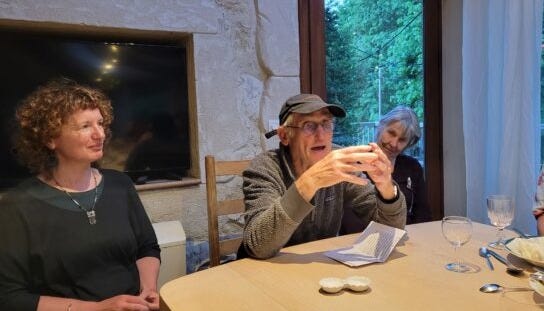
Later, Ton Vink, Tijlbert’s father, spoke about the vision when they founded the company. Their vision was always bigger than just growing herbs. It was about tending the larger ecosystem of health and believing that making relationships between different cultures and agriculture is a way to achieve that health.
Visiting Farmers
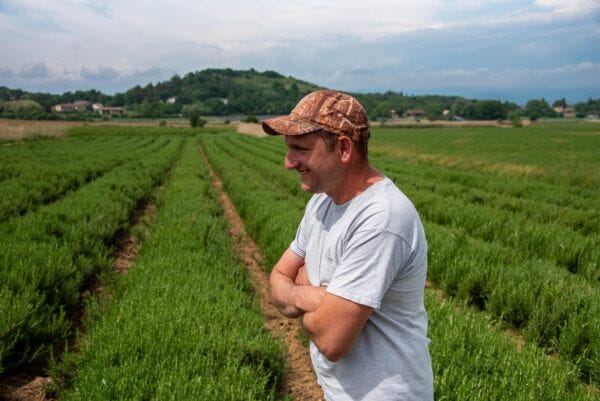
The next morning, we had a long drive to some of the farmers who sell herbs to l’Herbier. I organized the rides so that different people are in the vans together with a question as a discussion prompt. We then drove an hour west to the farm of Samuel Gachon, a third-generation farmer growing vegetable seeds, cereals, organic herbs, and walnuts, and raising sheep.
Eighty percent of the farming in this region was organic five years ago, he told us. But now more farmers are going back to conventional farming. We asked why. Too much paperwork, he said. The auditors just check the paperwork and don’t go to the field. He continues farming organically because they have contracts, and they have always been organic. It is in their DNA.
Someone asked about the challenges of organic farming. Without hesitation, he said: weeds, Ecocert (the auditor), and finding labor. “Being a farmer in France every day is a risk,” he said. Gesturing across the land, he said he keeps doing it because of the view. And because he is his own boss.
Another person asked what he would like customers using products from the herbs he grows to know. “We do our best and everyday we take care,” he said. “And we hope you can see this when you see the product.”
In preparing for these farm visits, we had talked about the differences between visiting farms to get to know the farmer as a whole person and visiting them to get information. Later, Ellie Thorne from Blue Sky Botanics mentioned how hard it was not to be extractive in farm visits, especially when we were such a large group. We had considered meeting in smaller groups or doing farmwork as an exchange, but both would likely have been more of an imposition, not less. And so, we settled on these conversations in a circle, trying to be considerate in our questions.
Later, they each told Helene they loved our visits. They appreciated our thoughtful and serious questions and that we seemed to genuinely care.
Manu Jean, the second farmer we visited, shared similar feelings and concerns. His father started farming in 1995, with sheep, wine, and herbs on 40 acres. This year, because of the heat and the lack of rain, he’s had to irrigate already. Normally, he doesn’t irrigate until the end of May or June.
We asked about challenges: finding labor is more and more difficult. The price of gas is increasing. And climate change, he added. His margin is dropping as costs increase.
But he can’t imagine doing anything other than farming organically.
“I love my job,” he said. “I like to be with the sheep, in nature, listening to the sounds of the sheep at 6 am, seeing the herbs grow, smelling them, and the view. And I love the view,” he added, echoing Samuel.
He explained that he works with the moon, following the best time to weed and to harvest. His father worked with the moon as well. He isn’t certified Demeter (biodynamic) because he doesn’t do the preps, and he also can’t do any more paperwork. Thirty-five percent of his time is paperwork, he said, echoing what others shared.
Pine Buds
The next morning, we had a longer drive. Different groups and a different question. We drove high up a ridge in the Ardèche, looking out across the valley. We walked up the ridge where we gathered on rocks. I invited everyone to sit with the land or a plant in stillness.
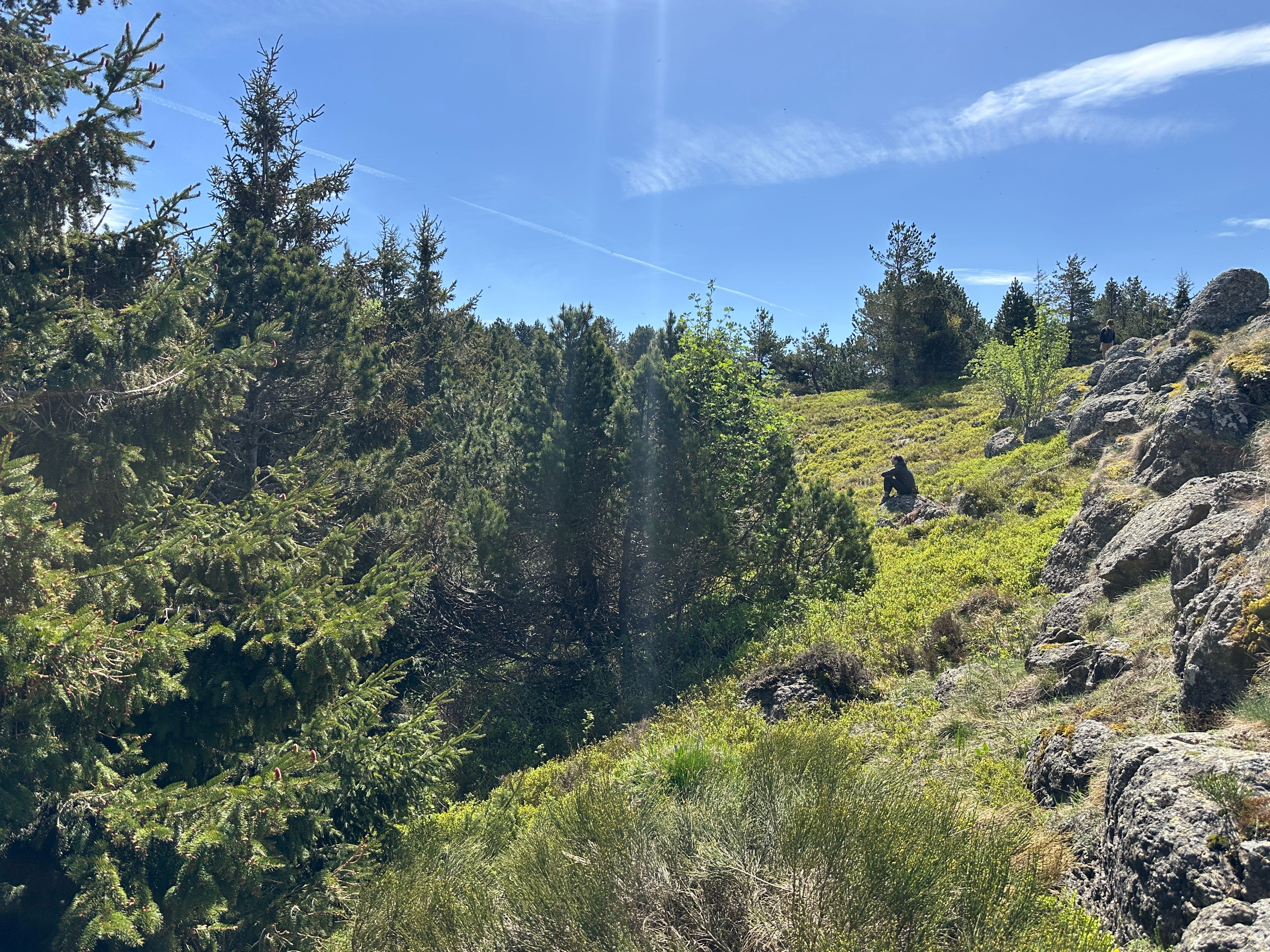
After gathering in a circle and sharing something from our experience, Max Bouillet, the collector, shared about his work. He collects buds from March to May. In the summer, elder flowers, st john’s wort; in the fall, ash, red vine leaves; in the winter, laurel leaves and rosemary. Three-quarters of his time is spent wild harvesting. One quarter is spent growing herbs. He grows oregano, daisy, wild pansy, and tarragon. Someone asked how he got started. He had a background in agriculture but never thought of becoming a wild collector until he visited a friend years ago who was collecting hawthorn flowers. He liked it and so he began doing it as well.
If a person doesn’t harvest in a sustainable way, he said, that person is the first one to suffer from the unsustainable practices.
Labor is hard. A lot of people are attracted to the job, they come to train, but it takes 3-4 years to make a living out of it, and few stick around that long. The price of herbs hasn’t increased. But he is more efficient, so he can make more money in less time. There is a balance between being efficient and respectful of the plants.
It is very important to have a 3-year contract because it takes time to find a good place to collect, and it is a lot of work if only for one year.
He explained the challenges: harvesters are getting older and harder to find. Climate change: they thought they would have time to harvest, but now the buds are ready sooner. Previously, once in twenty years, there would be weather challenges. Now it is 1 in 3 years. And contamination in part from stricter regulations is a challenge.
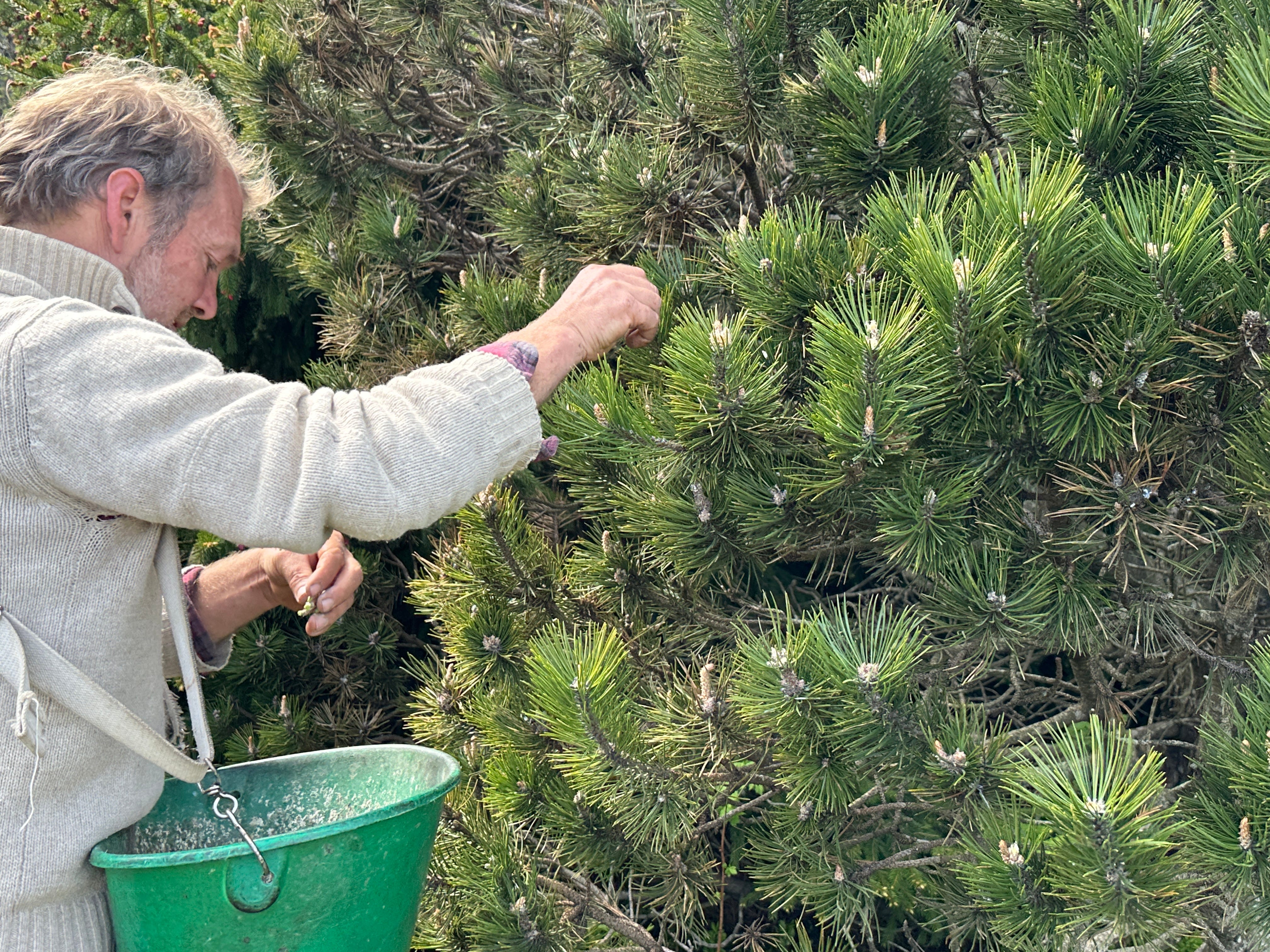
We then headed off in two groups to harvest pine buds. As we headed off, he said don’t step on the bilberries. Even if they won’t be harvesting them, we need to respect those who will be. That stayed with me during our entire visit. The unseen future informs our present actions.
We gathered in a circle before climbing back in the cars. Someone shared, “Different people, different plants, and places all over the world, but the same situation.”
Dreaming
On the last afternoon of our week together, we gathered in the garden at l’Herbier where staff ate their lunch. I invited everyone to journal and then share in a small group, then journal and share again. We then gathered in a circle, shared our reflections, and discussed how we can each dream bigger and have more courage. We suggested having accountability buddies to help us stay on track and follow through on what we envision. For starters, I said I would share my dream for SHI with the group in hopes that they, as Jeff Higley, co-founder of Oshala Farm, outlined, could help me make that dream happen.
Something happens on these Learning Journeys that emerges from the place, the plants, and the people, but is difficult to articulate. We slow down, we pay attention differently. We listen more deeply. People are open, curious and committed to taking what we learn into bringing about the changes needed. Maybe it simply comes down to Max’s simple reminder to us: to twenty-three people from eight countries to watch where they put their feet because where we placed them would impact the livelihoods of those coming after us.
Once again you have brought us to the land, the plants and the people who deeply care for the environment in which they live along with the work they have chosen. We learn of the plants they have developed personal relationships with, the challenges that rise, the awareness that grows with years of tending and harvesting the herbs that offer healing to the world. The quiet passion of following one's heart, the willingness to do what needs to be done to continue the work of sharing the green heart of Gaia~ here in your words I find hope and wisdom to ponder in the plant work and life I was called to long ago. Thank you Ann for the ways you paint with words and honest personal reflections. xx K